

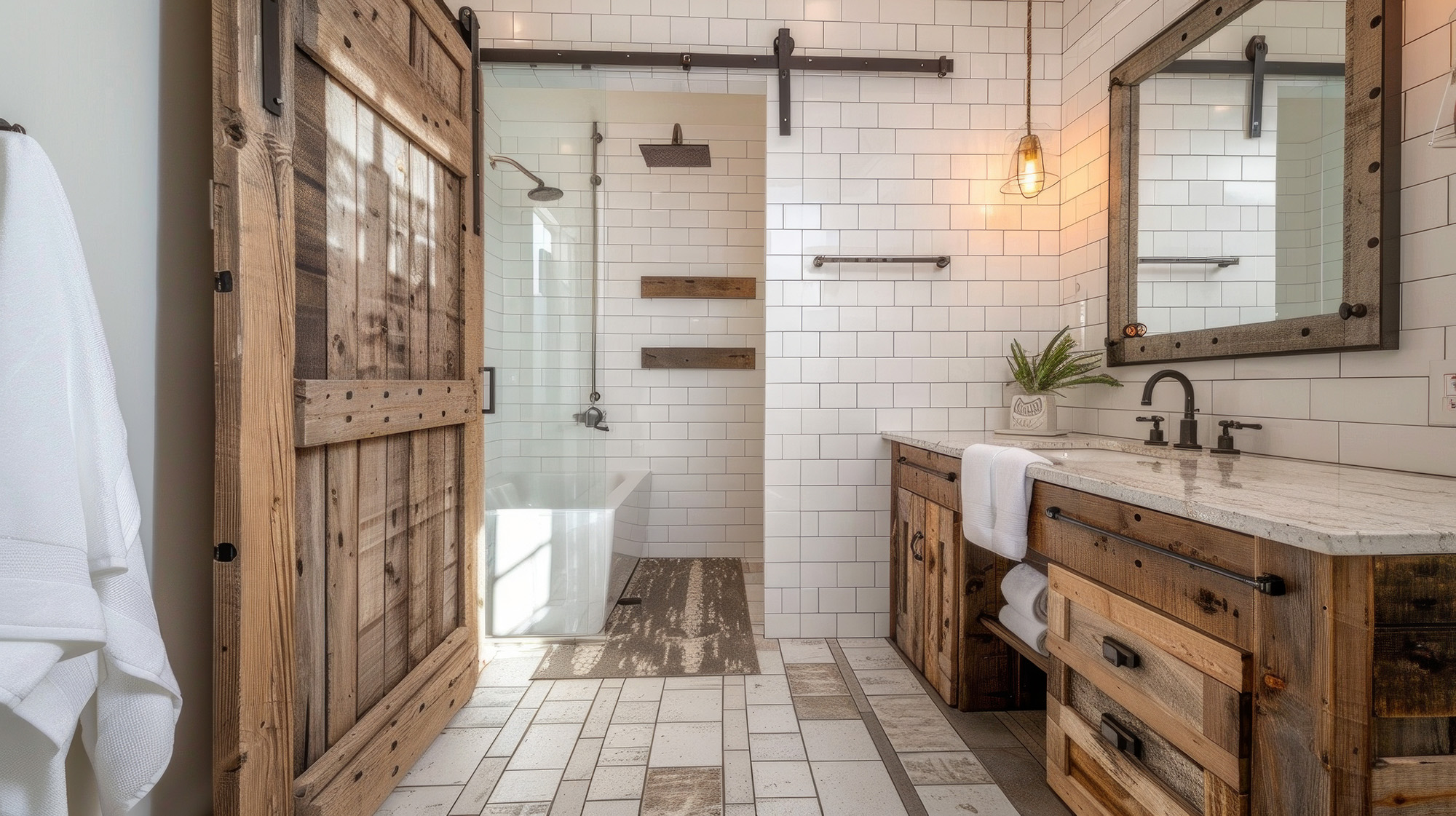
Walk into any tile showroom and you will see travertine, honed limestone tile, and porcelain designed to mimic natural stone lined up next to each other. What most homeowners do not realize is that the ground under Georgetown is directly tied to why those styles exist and why they look the way they do.
Georgetown Sits On A Layer Of Real Geological History
Western Georgetown and much of the Hill Country sit on Edwards limestone, a layer of sedimentary rock that formed from ancient marine sediment roughly one hundred million years ago. This is the same limestone visible in the exposed rock faces along the San Gabriel River and in quarries throughout Central Texas.
That limestone is not just scenery. It has been quarried, cut, and finished into building material for centuries, and its natural texture, veining, and warm neutral tones became the visual template that an enormous share of the tile industry still draws from today, whether the tile in question is genuine stone or porcelain designed to replicate it.
Why Natural Stone Tile Looks The Way It Does
Travertine, one of the most recognizable natural stone tile options, forms specifically from limestone deposited near mineral hot springs, which is why it carries those characteristic small pits and fissures across its surface. Limestone tile itself is simply cut and finished directly from quarried blocks, keeping the natural variation, subtle color shifts, and soft matte finish intact.
Every batch is a little different because it comes directly from the earth rather than a factory formula. That variation is exactly what gives natural stone floors their depth, but it also means matching tile precisely from one order to the next takes a trained eye, which is one reason natural stone installations benefit from a showroom that can physically lay out full boxes before installation day.
Why Porcelain Tile Borrows The Same Look
High definition printing technology now lets manufacturers scan actual limestone and travertine surfaces and reproduce that texture on porcelain tile with remarkable accuracy. The result gives homeowners the visual warmth of quarried stone with the water resistance, consistency, and lower maintenance of a manufactured product.
This is why so much of the tile industry today is really built around interpreting the same geological material Georgetown sits on top of. The limestone look has become a design language of its own, independent of whether the tile in your hallway actually came out of the ground or came off a production line.
What This Means When You Are Choosing Tile
Understanding where a look comes from helps explain why certain tile lines cost more than others. Genuine limestone and travertine require quarrying, cutting, and sealing, which adds cost and some ongoing maintenance in the form of periodic resealing. Porcelain versions of the same look trade a small amount of that organic variation for a harder, denser, more moisture resistant surface that needs no sealing at all.
Neither option is automatically the better choice. It depends on whether you want the exact irregularity of real stone or the practical performance of a manufactured tile that captures the same aesthetic. Seeing both side by side, ideally in the room where the tile will actually live, makes that decision much easier than comparing samples online.
Bringing That Decision Into Your Home
Town Square Floors carries both genuine natural stone and high definition porcelain tile lines, so Georgetown, Round Rock, Austin, Jarrell, and Liberty Hill, TX homeowners can compare the real material against its manufactured counterpart in person before deciding. Lighting, grout color, and finish all change how either option reads in a specific room, which is difficult to judge from a small sample chip.
Our team can walk you through which option fits your home's style, budget, and maintenance expectations, drawing on decades of experience matching tile to Central Texas homes built on this same limestone landscape.
Ready to see how the Hill Country's own geology shows up in your next flooring project? Visit Georgetown, TX to browse our full tile collection in person. Contact us to schedule a free design consultation and find the stone look that fits your home.


