

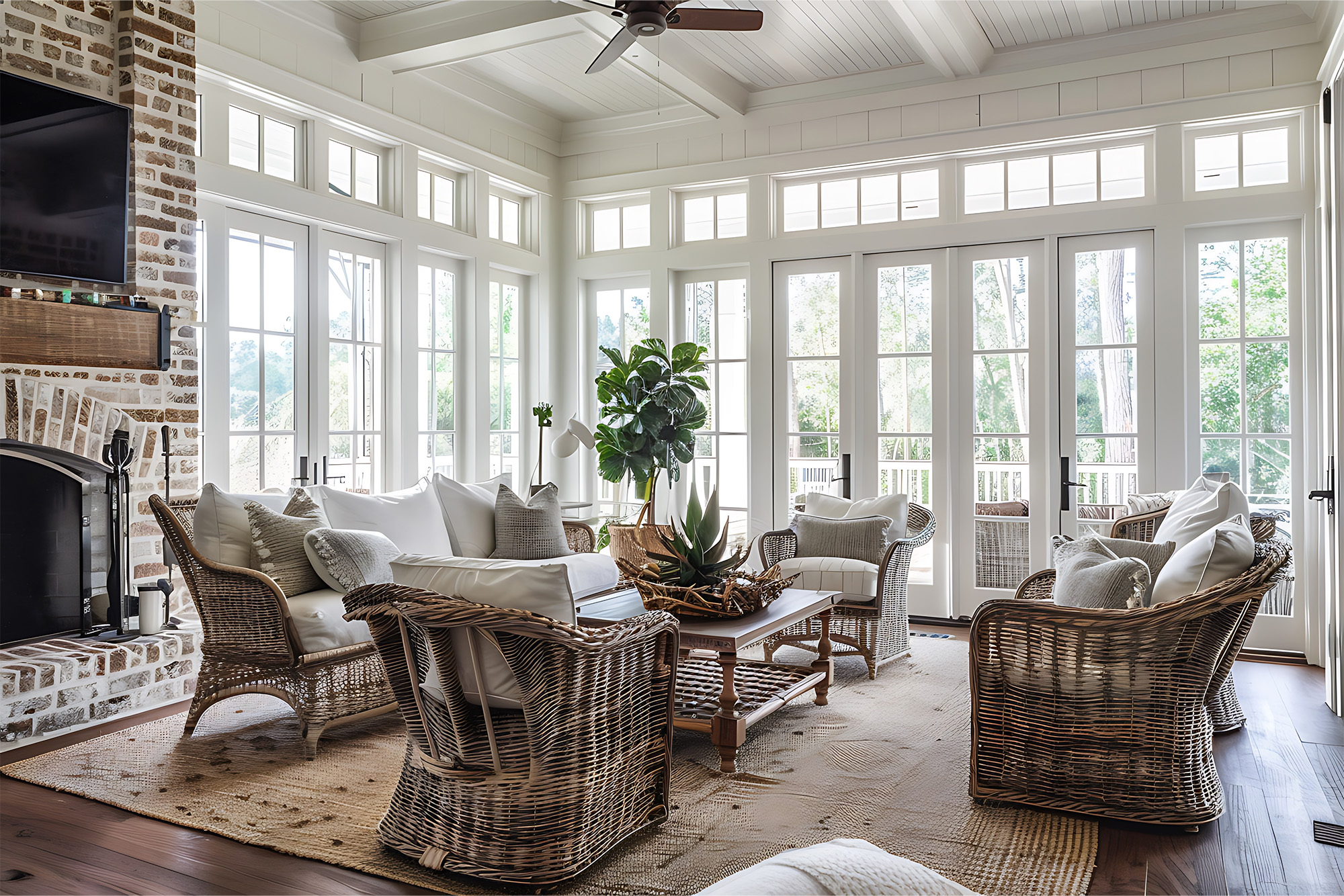
Dark floors have long carried a reputation for making rooms feel tighter or more enclosed. In reality, that outcome depends less on color alone and more on how light interacts with the floor’s surface. In modern homes, especially open layouts with large windows, dark flooring can feel grounded and expansive when the right technical details are in place.
Understanding sheen, plank sizing, and sunlight direction is what separates a room that feels elegant from one that feels visually compressed.
Sheen Matters More Than Color Depth
Sheen controls how light moves across the floor surface. In 2026, most well‑designed dark floors avoid high‑gloss finishes.
Matte and low‑satin finishes absorb glare instead of reflecting it unevenly. This reduces harsh contrast at eye level and allows walls and ceiling lines to remain visually dominant, keeping the room balanced.
High‑gloss dark floors, by comparison, reflect window light in streaks. In smaller rooms, that reflection exaggerates boundaries and draws attention to edges, which is what creates a “shrinking” effect.
Window Direction Changes Everything
Sun exposure directly affects how dark flooring reads throughout the day.
South‑ and west‑facing rooms receive strong light, which allows dark floors to show depth rather than heaviness. In these spaces, matte dark planks can anchor the room without overpowering it.
North‑facing rooms and shaded interiors need more caution. Without consistent natural light, dark floors can dominate unless paired with lighter walls, wider plank sizing, and minimal visual interruptions.
Window size matters as much as direction. Large glass areas make dark flooring feel intentional and architectural instead of heavy.
Plank Width and Length Control Perceived Scale
Narrow planks are one of the most common reasons dark floors feel busy or confining.
Wider planks reduce the number of visible seams, creating longer uninterrupted lines. This visually stretches the room footprint and offsets the depth of a darker tone.
Longer plank lengths further enhance this effect by guiding the eye across the space instead of breaking it into smaller sections. In 2026, dark flooring performs best in widths of 7 inches or wider with extended plank lengths.
Contrast Strategy Makes Dark Floors Work
Dark floors do not need to be paired with stark white interiors, but they do need controlled contrast.
Balanced combinations include
• Warm neutral walls instead of cool gray
• Trim that is lighter than the floor but softer than bright white
• Furniture legs that allow visible floor space
These details preserve visual breathing room and prevent dark floors from closing in the envelope of the space.
When Dark Floors Actually Make Rooms Feel Larger
Dark floors can visually expand a room when
• Sheen is matte or low satin
• Planks are wide and long
• Natural light is consistent
• Floor runs continuously through connected spaces
In open‑concept homes, dark floors often improve visual flow by grounding large areas with fewer transitions.
Conclusion and Visit Our Showroom
At Town Square Floors in Georgetown, TX, we help homeowners select dark flooring based on real room conditions, not outdated design myths. Our showroom displays matte finishes, wide planks, and installation layouts that demonstrate how dark floors truly perform.
We proudly serve Georgetown, Round Rock, Austin, Jarrell, and Liberty Hill, TX.
If you’re considering dark floors and want to see how sheen, plank width, and layout work together, contact us today to schedule a consultation or visit our showroom for expert guidance.


