

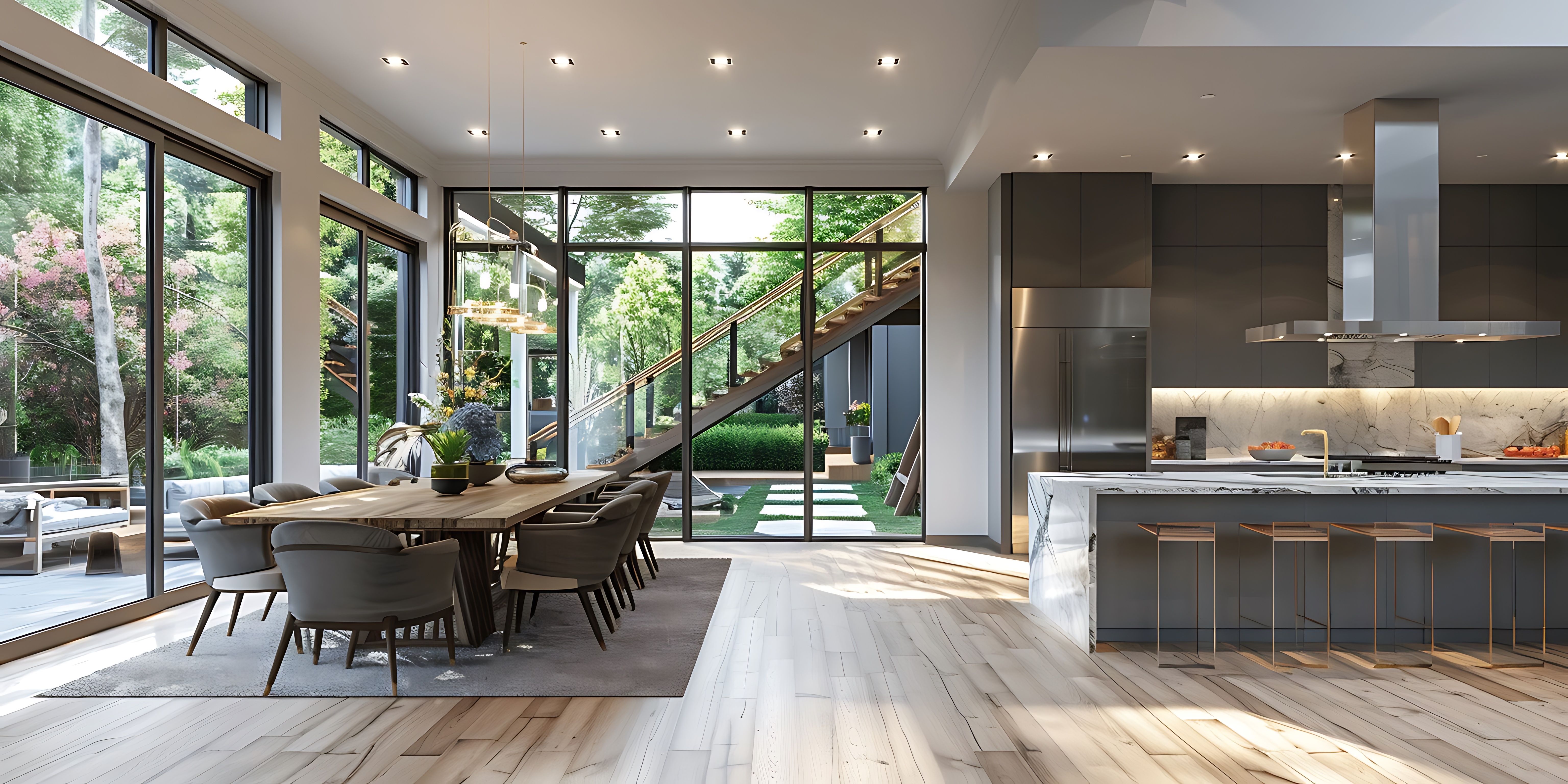
Start with “natural cues,” not trends
For biophilic floors, the best visuals are believable: stone looks that have depth and controlled variation, and wood looks that feel warm without going orange or gray. Matte or honed finishes usually read more “natural” and are easier to live with because they hide streaks and reduce glare. The goal is to support plants, textiles, and warm lighting, not compete with them.
Choosing stone-look tile that doesn’t feel printed
High-quality stone-look porcelain typically has layered print depth, a realistic range of faces (so repeats aren’t obvious), and microtexture that matches the visual pattern. Warm limestone visuals and travertine-inspired looks are often the easiest route to “grounded calm,” while high-contrast marble veining can make the floor the loudest thing in the room. For wet or traffic zones, confirm slip data and avoid overly smooth finishes that become unpredictable with water.
Choosing warm wood tones without fake gray or orange
For laminate, prioritize undertone and sheen. Warm neutrals (oat, wheat, natural oak) with low sheen usually create the calmest base. Look for realistic embossing, sensible plank proportions, and a pattern repeat that doesn’t scream “same board again.” The best biophilic laminates feel warm underfoot and visually soften the room, especially in bedrooms, living rooms, and home offices.
Where tile vs laminate makes the most sense in a real house
Stone-look tile belongs where moisture, grit, and heavy traffic show up: entries, kitchens, laundry rooms, and patio doors. Laminate belongs where comfort and quiet matter: bedrooms, living rooms, and offices. The biophilic win is not forcing one surface everywhere. It’s placing materials where they support the way you live, then tying them together with a consistent palette and clean transitions.
One practical spec section
Pick a warm matte limestone/travertine-look porcelain for wet/traffic zones
Pick a low-sheen natural oak laminate for comfort zones
Keep stone movement subtle; keep wood grain low to medium contrast
Match grout to the tile tone so lines don’t shout
Plan tile-to-laminate transitions at doorways or natural breaks
Match heights (tile thickness + underlayment) to avoid steep reducers
Use pH-neutral cleaners on tile; damp-mop only on laminate
Biophilic interiors feel grounded when the materials look believable, the finishes cooperate with light, and the placement matches real life. Stone-look tile gives durable calm in wet and high-traffic zones, while warm wood-tone laminate brings comfort and quiet where you rest and focus. For samples, pairing support, and install planning, Town Square Floors can help you build a floor system that looks natural and lives well. Visit Georgetown, TX, and if you’re in Georgetown, Round Rock, Austin, Jarrell, and Liberty Hill, TX, contact us to schedule a consult and get a buyer-ready estimate.


